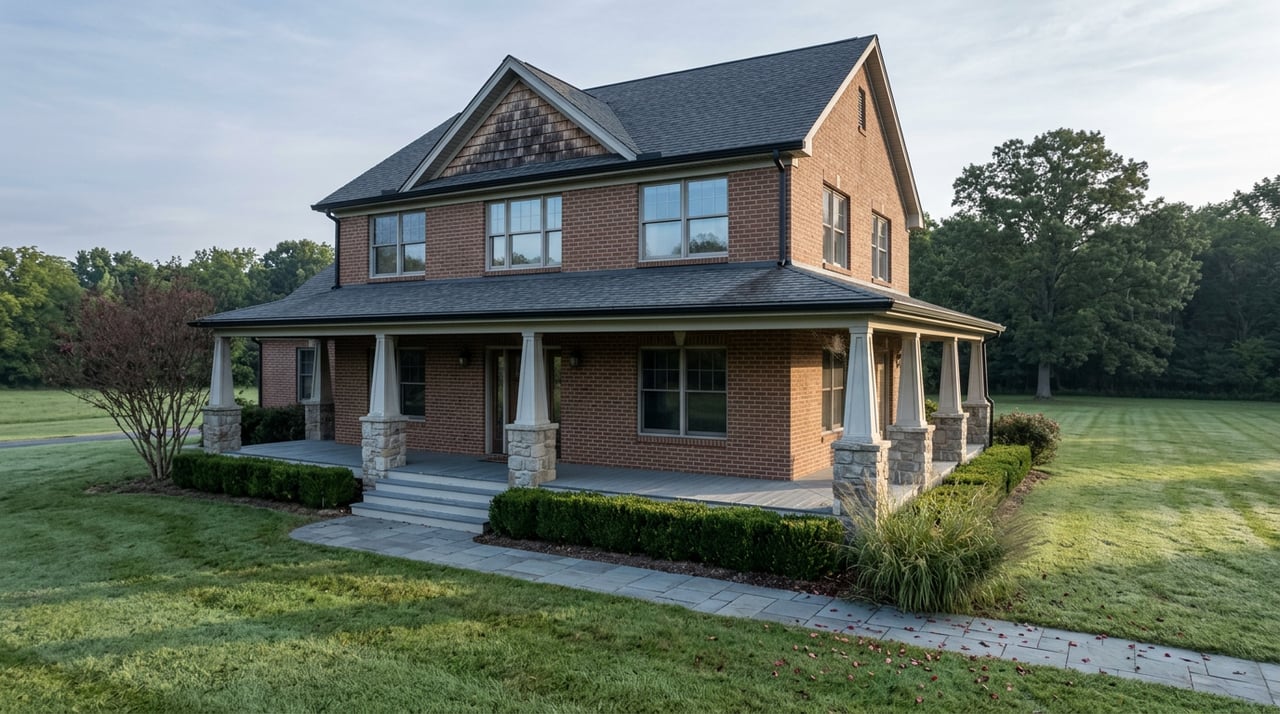
Morehead's Median Home Price Says One Thing. The Price Per Square Foot Says Another.
September 17, 2026
September 17, 2026
On a Friday morning in early August, Morehead State University cut the ribbon on Prefontaine Hall, a four-story, 80,000-square-foot residence hall that will house just over 300 students. It's the first of what university officials describe as a nearly $225 million wave of new construction, and it's still running. Martin Hall, a second new residence hall, is expected to open in 2027. A third hall, approved by the Board of Regents this past June, is already in the pipeline, and two aging buildings, Cartmell Hall (occupied since 1969) and the Lloyd-Cassity Building (since 1962), are slated for decommissioning to make room.
If you're shopping for a house in Morehead right now, none of that construction shows up on a listing sheet. But it's quietly doing something to the numbers you'll see on any portal search, and understanding what is the difference between reading the market correctly and reading it wrong.
Here's the puzzle. As of June 2026, one major data source put Morehead's median sale price up 42.7 percent year over year. In the same window, the median sale price per square foot was down 26.1 percent over the same period. Those two numbers describing the same market, in the same month, shouldn't be pulling apart like that. If home values were genuinely rising, price per square foot should be rising too, since it strips out size and just measures what buyers are paying for the square footage itself.
A different source, tracking August 2026 list prices rather than closed sales, showed the price per square foot essentially flat compared to both the prior month and the prior year. That's not necessarily a contradiction. It's a clue. One number reflects what sellers are asking. The other reflects what buyers actually paid at closing. When those two diverge this much, the story usually isn't about appreciation. It's about which homes happened to sell.
In a market as small as Morehead's, where a single month's closed sales might number in the dozens rather than the hundreds, one unusual sale, or a cluster of similar ones, can swing a median hard in either direction without reflecting anything about the broader trend. The honest read here is that Morehead didn't get 43 percent more valuable in a year. What sold this year skewed larger and pricier than what sold last year, and that shift in the mix, not a shift in underlying value, is what's showing up in the headline number.
So why would the mix shift right now? Start with the university. Morehead State's on-campus housing expansion isn't a background detail, it's actively reshaping how much off-campus rental housing near campus is in play at any given moment. A university spokesperson overseeing the construction put it plainly:
"It's been an impact for really for the last 2 to 3 years."
That's not a comment about dorm life. That's a statement about disruption timing, and it matters for anyone trying to read the resale market during the same window. While MSU adds and subtracts residence halls, the demand for small houses and duplexes near campus that landlords typically buy and rent to students doesn't hold steady. It moves with the construction calendar. Homes that would ordinarily turn over as rental inventory sit differently in the market depending on where the university is in its building cycle, and that changes which properties are actually closing in a given quarter.
Longer term, once Martin Hall and the third residence hall are finished, more students living on campus could mean less pressure on the small, older homes near downtown that have historically served as off-campus housing. That's a slow-moving shift, not a market condition. But if you're comparing this year's median to a normal year, you're comparing across a period when the university's own housing supply was unusually in flux.
There's a second force working on the same small end of the market. Morehead's short-term rental scene grew fast this year, with active Airbnb listings up 104 percent year over year to 24 properties as of April 2026. The bulk of that supply, 13 of the 24 listings, is concentrated in two-bedroom properties, which happen to be the exact size and price point that first-time buyers and owner-occupants also compete for.
Average annual revenue on those properties runs around $18,873, with the strongest months from June through November and a steep drop-off in February. That kind of seasonal, investor-driven demand doesn't show up as a separate category on a portal search. It shows up as fewer small homes available for owner-occupant buyers, because some of that inventory is being bought and held for nightly rental instead of listed for sale to a family. When the entry-level segment thins out on the resale side, what's left to close skews toward larger homes, and the median rises for a reason that has nothing to do with those homes being worth more than they were last year.
None of this means Morehead and its surrounding towns are priced the same. They're not, and the differences are real enough to matter if you're deciding between a house in town and one ten minutes out.
| Town | Typical home value |
|---|---|
| Clearfield | $128,805 |
| Frenchburg | $119,212 |
| Salt Lick | $136,342 |
| Morehead | $155,582 |
| Owingsville | $155,836 |
| Hillsboro | $170,959 |
These figures, drawn from current neighborhood-level value estimates, are a snapshot, not a forecast, and they'll move. But they illustrate the point better than any single median can. A few miles in either direction changes what a comparable dollar buys, and none of those smaller towns carry the same university-driven rental churn that's currently muddying Morehead's own numbers.
If you're using the median sale price alone to judge whether Morehead is getting more expensive relative to Clearfield or Owingsville, you're comparing a number that's currently distorted by construction timing and short-term rental activity to numbers that mostly aren't. The more honest comparison looks at price per square foot for homes similar in size and condition to the one you're actually considering, and it asks where that specific property sits relative to campus.
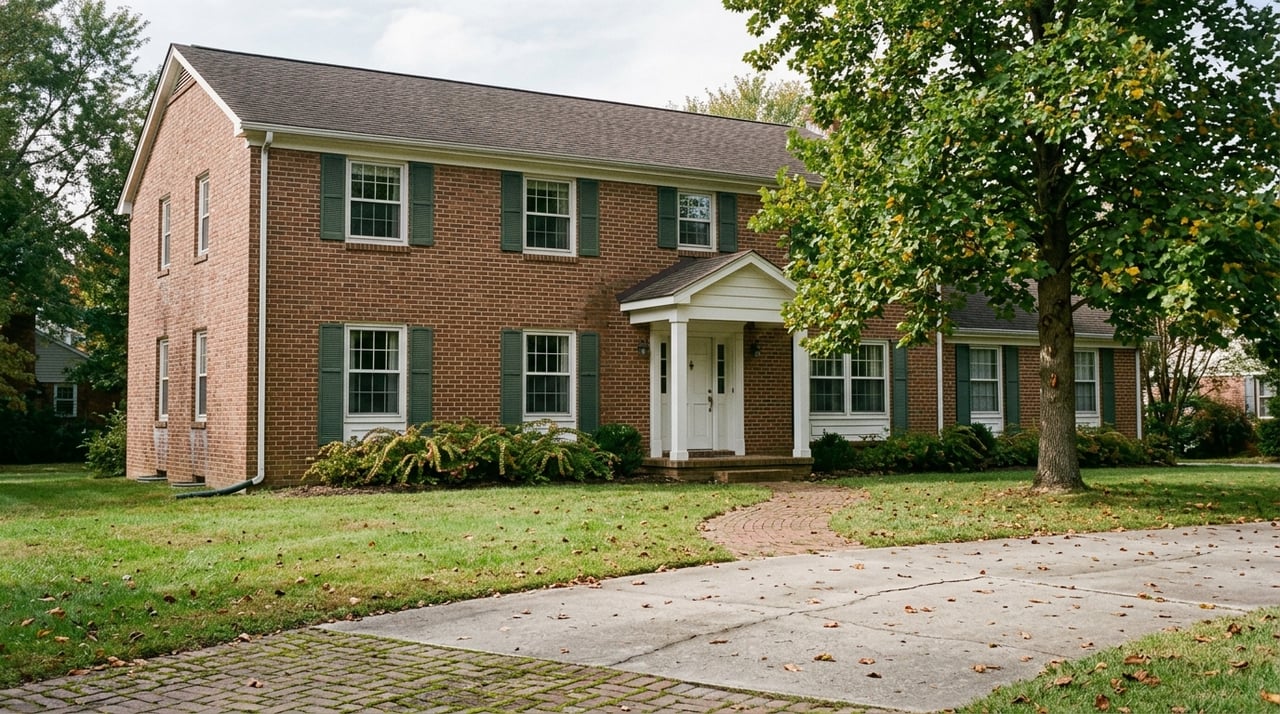
A three-bedroom brick ranch a mile from Main Street is playing in a different market than the same size home fifteen minutes out past the university's rental radius. One of those homes is competing with landlords and STR investors for buyer attention. The other mostly isn't.
Does this mean Morehead home values are actually falling? No. It means the median price and the median price per square foot are measuring different things this year, and the gap between them is a mix-shift signal rather than a value signal. Neither number alone tells you what a specific house is worth.
Should I wait for the university construction to finish before buying? Not necessarily. The construction affects which properties are turning over and how they're priced relative to each other, not whether now is a good or bad time to buy the specific home you want. What matters more is understanding whether your target property sits inside the zone affected by student rental demand or outside it.
If you're weighing a house in Morehead against one in Clearfield, Owingsville, or anywhere else in Bath or Rowan County, the median price on a portal is a starting point, not an answer. Working through what a specific property's price per square foot actually reflects, and where it sits relative to the university's shifting rental footprint, takes someone who watches this market closely enough to catch the difference. That's the conversation worth having before you write an offer.
Zachary Otis is a Bath County native and Morehead-based REALTOR who works with buyers and sellers across Bath, Rowan, and the surrounding counties. Let's Connect.
Stay up to date on the latest real estate trends.
From Salt Lick, Kentucky, he is very passionate about serving others and being a positive voice in his community. He hopes to assist his clients by negating the stress that buying or selling real estate may cause.